
'Nomadic Island', 2024
Moving image(03:05), ceramic, metal, clay, glue, tea leaves, sand, stones, wool, plastic net, alum, glass beads
Overall display dimension variable
Chelsea College of Arts, London
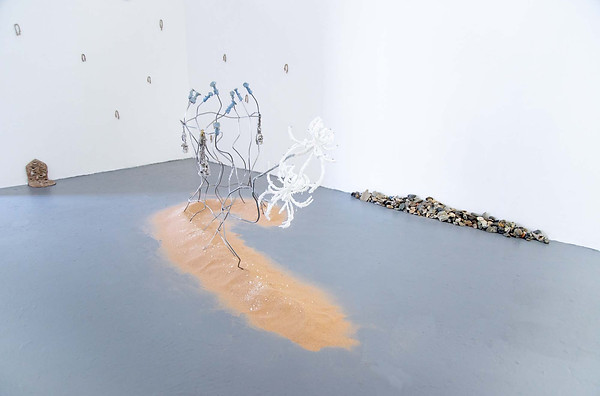
'Nomadic Island', ceramic, metal, clay, glue, tea leaves, sand, stones, wool, alum, glass beads
As I gaze at the Thames, my awareness rises and falls with the shimmering surface of the river. My thoughts are absorbed by the relentless tides, entering a state of suspended time.
In a world where everything is interconnected and animistic, Nomadic Island explores the fringes between humanity and nature, telling the story of an island that wanders beyond the constraints of time and space. Driven by the tides, this island can appear at any point in time and place in the world, as unpredictable as the tides themselves. On the island, all traces originate from the past, present, and future. Looking back at history, the imprints of the Silk Road can be found on the island. Fabrics, fragments of porcelain, tea leaves, and seeds were once brought to new lands by tides and ships. Their presence is both a dance with the ecosystem and a response to the evolution of civilization and the development of history. The end of time records millions of tidal rises and falls, revealing eroded monuments and fossils. Artificial objects and organic beings intertwine, forming hybrid chimeras.
The work presents the style of mid-20th-century science fiction. It delves into the interwoven concepts of time and space discussed in Jorge Luis Borges' short stories and Italo Calvino's Invisible Cities. Combining the Taoist view of nature, where everything follows its own laws, the work builds a narrative around heritage, history, spatiotemporal distances, and ecosystems.
当我望向泰晤士河,我的觉知随着波光粼粼的河面起伏。我的思绪被不停歇的潮汐吸入,进入停滞的时间。
Nomadic Island在万物有灵且互相联系的世界中探寻人类和自然的边缘地带,讲述了一个游牧在时空之外的小岛的故事。这座小岛在潮汐的推动下出现在任意的时间节点和世界的任何地方,它的出现和潮汐的到来一样难以预测。小岛上,所有的痕迹来源于过去、现在和未来。回望历史,丝绸之路的印记可以在岛上被发现。织物、瓷器碎片、茶叶、种子曾经被潮汐和船只带到新的土地。它们的存在既是与生态的共舞,也是对文明演化和历史发展的回应。时间的尽头记录了千万次潮起潮落,被侵蚀的纪念碑和化石显露出来。人造物和有机体交缠,形成杂交的嵌合体。诗歌既是遥远的传说,也是近处的预言。河岸和潮水的交界处,隐约可见不断流动的边界。
作品呈现出上世纪科幻小说的风格。它深入豪尔赫·路易斯·博尔赫斯的短篇小说和伊塔罗·卡尔维诺《看不见的城市》中讨论的交错的时空观。结合道教万中物皆有其规律的自然观,作品围绕遗产、历史、时空距离、生态系统建立叙事。
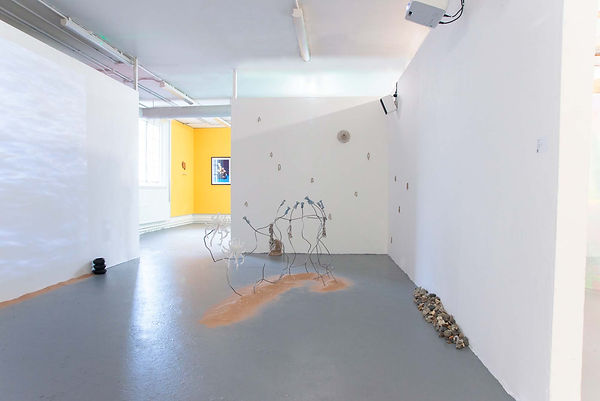
'Nomadic Island', moving image(03:05), ceramic, metal, clay, glue, tea leaves, sand, stones, wool, plastic net, alum, glass beads

'Nomadic Island', ceramic, plastic net
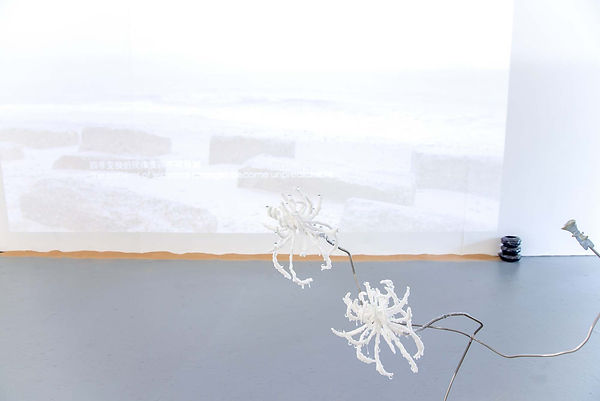
'Nomadic Island', moving image(03:05), ceramic, metal, clay, glue, sand, glass beads
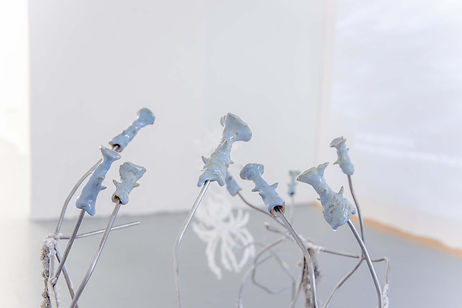
'Nomadic Island', ceramic, metal, sand, wool, alum

'Nomadic Island', ceramic, tea leaves
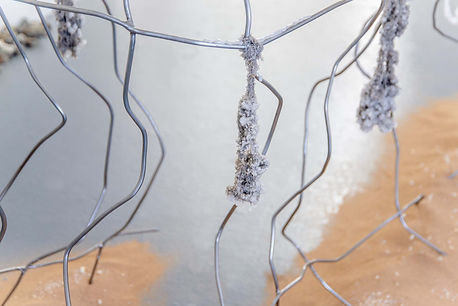
'Nomadic Island', metal, sand, wool, alum